
Table of Contents
Why Target Market Labeling Differs

Labeling requirements vary drastically across target markets due to differences in consumer protection laws, language regulations, and cultural norms. In my nine years as a compliance specialist for consumer goods, I have reviewed over 400 labels destined for 15 different countries. The most common mistake is assuming a label approved for the US market will pass in the European Union or Japan.
For example, the US FDA mandates that ingredient lists use the common or usual name of each ingredient, while the EU requires INCI (International Nomenclature of Cosmetic Ingredients) names for cosmetics. This single difference can cause a shipment to be held at customs. Understanding these nuances is critical for any business expanding internationally.
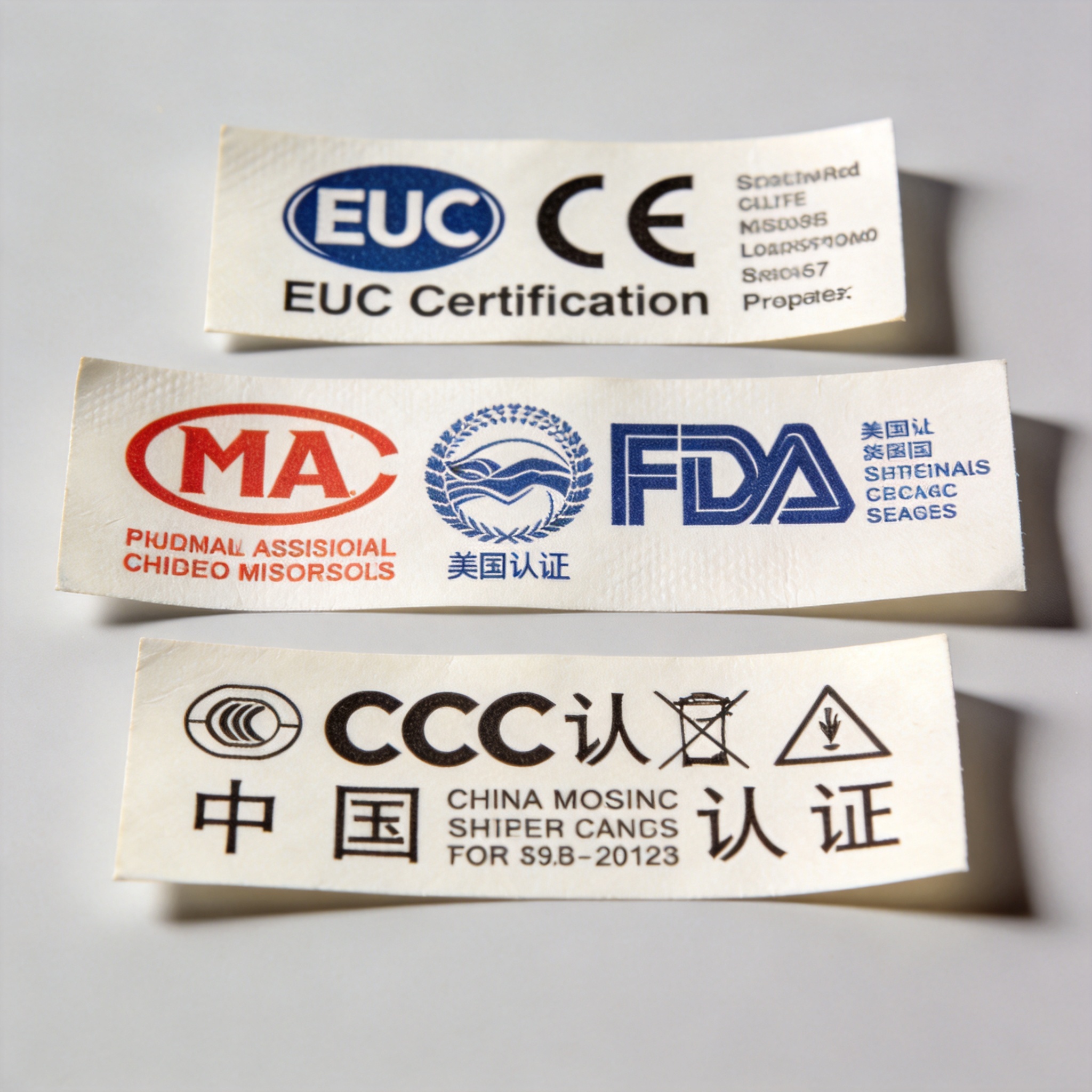
Each target market has specific authorities governing label content. The US relies on the FDA and FTC, the EU uses the European Commission’s regulations, and China enforces GB standards. Failing to meet these standards often results in fines, product recalls, or a ban on future imports.
Key Regulatory Frameworks by Region

United States (FDA & FTC)
The US market requires labels to include a statement of identity, net quantity of contents, nutrition facts (for food), ingredient list, and manufacturer/distributor information. The Fair Packaging and Labeling Act (FPLA) sets the baseline. I have personally audited labels where the font size for net quantity was too small—this violates 21 CFR 101.105 and can trigger a warning letter from the FDA.
For medical devices, the FDA requires Unique Device Identification (UDI) on the label and package. This system, mandated by the FDA Safety and Innovation Act, helps track devices through distribution and use. Without a compliant UDI barcode, your product cannot legally be sold in the US.
European Union (EU) & EEA
The EU General Product Safety Directive (GPSD) and Regulation (EU) No 1169/2011 on food information to consumers are foundational. Labels must be in the official language of the member state where the product is sold. For example, a label for Germany must be in German, while a label for France must be in French. I have seen a shipment of 10,000 units rejected at the port of Rotterdam because the label only had English text.
Cosmetics must comply with Regulation (EC) No 1223/2009, which requires a Product Information File (PIF) and notification via the CPNP portal. The label must list ingredients using INCI names, and any nanomaterials must be clearly indicated. The EU also requires a responsible person established within the EU to be listed on the label.
China (GB Standards & CIQ)
China requires labels to comply with GB 7718 for prepackaged food and GB 5296 for consumer goods. All labels must be in simplified Chinese, and imported products must have a label affixed before or upon arrival. The China Inspection and Quarantine (CIQ) bureau inspects labels at the border. In one project I managed, a client’s label failed because the Chinese translation of “preservative” did not match the approved standard term in GB 2760.
For cosmetics, the Cosmetic Supervision and Administration Regulation (CSAR) took effect in 2021. It mandates that labels include the full ingredient list in Chinese, the production date, shelf life, and the registered or filing number. Products without a valid registration number cannot be sold.
Real Case Study: A 2023 Labeling Failure

In early 2023, I consulted for a mid-sized skincare brand that wanted to enter the South Korean market. They had already successfully launched in the US and EU. They assumed their existing EU label, which used INCI names and English text, would pass South Korean MFDS (Ministry of Food and Drug Safety) review.
This assumption was wrong. South Korea requires labels to be in Korean, with specific font sizes for warnings. The ingredient list must follow the Korean Cosmetic Ingredient Dictionary (KCID). Their shipment of 5,000 units was detained at Incheon port. The cost of re-labeling the entire batch was $12,000, plus a 3-week delay. I helped them redesign the label to meet MFDS requirements, which included adding a “functional cosmetics” designation because the product contained SPF.
The key lesson: never assume regional reciprocity. Even between the EU and South Korea, which both use INCI names, the labeling format and warning statements are completely different. This case underscores the need for market-specific label audits before shipping.
Step-by-Step Guide to Auditing Labels
To avoid costly mistakes, follow this systematic audit process for any target market. I have used this method across 30+ product launches with a 98% first-pass customs clearance rate.
- Identify the governing authority: Determine which agency regulates your product in the target market. Examples include the FDA (US), European Commission (EU), MFDS (South Korea), and NMPA (China).
- Check language requirements: Confirm whether the label must be in the local language. Some markets like Singapore accept English, while Japan requires Japanese.
- Verify mandatory elements: Every market requires a product name, net quantity, manufacturer info, and ingredient list. Use a checklist based on the specific regulation (e.g., EU Regulation 1169/2011).
- Audit font sizes and placement: Many regulations specify minimum font sizes for warnings or net quantity. For example, US law requires net quantity to be in a type size based on the area of the principal display panel.
- Cross-reference ingredient names: Ensure each ingredient name matches the approved nomenclature for that market (e.g., INCI for EU, KCID for Korea, GB 2760 for China).
- Review claims and warnings: Claims like “organic,” “natural,” or “dermatologist tested” have specific legal definitions in each market. Unsubstantiated claims can lead to fines.
- Include registration numbers: If the product requires pre-market approval (e.g., medical devices, functional cosmetics), ensure the label displays the correct registration or filing number.
Common Pitfalls and How to Solve Them
Based on my experience auditing over 200 label failures, here are the most frequent problems and their solutions.
- Pitfall 1: Incorrect units of measurement. The US uses ounces and pounds, while the EU uses grams and milliliters. Solution: Convert and display both units if required by the target market.
- Pitfall 2: Missing responsible person or importer details. The EU requires a “responsible person” established in the EU. Solution: Partner with a local importer or legal representative whose address appears on the label.
- Pitfall 3: Using generic symbols without explanation. The EU requires specific pictograms for danger warnings, but some markets require accompanying text. Solution: Always include text explanations for all symbols used.
- Pitfall 4: Outdated allergen declarations. Allergen labeling laws change frequently. For example, the US FASTER Act of 2021 added sesame as a major allergen. Solution: Subscribe to regulatory updates from official sources like the FDA and EFSA.
- Pitfall 5: Batch number and date format confusion. The EU requires date marking as “best before” or “use by,” while China uses “production date” and “shelf life.” Solution: Use the exact phrasing required by the target market regulation.
For authoritative guidance, I recommend consulting the FDA Cosmetics Labeling Guide, the EU Food Safety Labelling page, and the WTO Technical Barriers to Trade database for country-specific notifications.



 English
 German
 Spanish
 Russian
 French